The European pulp and paper industry had already raised urgent concerns over the European Commission’s recently adopted benchmarks for free allocation and installations’ exclusions, warning they could lead to a loss of approximately €1 billion annually in planned decarbonisation investments. The sector argues that conditionality for free allocation and the 95% biomass threshold should be removed from the ETS framework unveiled today, as infrastructure and decarbonisation technologies are not yet sufficiently available, and while the new EU ETS plans already give green investors cold feet.
One of the first industrial sectors to endorse the EU’s climate objectives, pulp and paper, has decarbonised by more than 55% since 2005. The performance in cutting climate damaging emissions stands out amongst energy-intensive industries covered by the scheme.
But the sector’s many smaller companies find themselves lacking viable decarbonisation solutions they can afford. Even larger firms are now anticipating difficulties in securing investments for future projects. A previous Commission proposal on ETS benchmarks published in June means the sector is expected to miss on approximately €1 billion annually in planned decarbonisation investments between 2026 and 2030, according to Cepi estimates.
If implemented as such, the newly announced ETS framework would further reduce free allocation, worsening even more the business case for investments and undermining the sector’s capacity to decarbonise.
Conditionality of ETS free allocation is a major point of contention. Mills exposed to international competition are required to meet specific energy-efficiency and decarbonisation obligations to retain ETS allowances. However, the administrative burden of detailing investment plans, and the detraction of limited capex resources while decarbonisation options are still lacking, poses a significant risk. Failure to deliver on now increasingly uncertain plans can result in reduced free allocations, further exposing the sector to carbon costs.
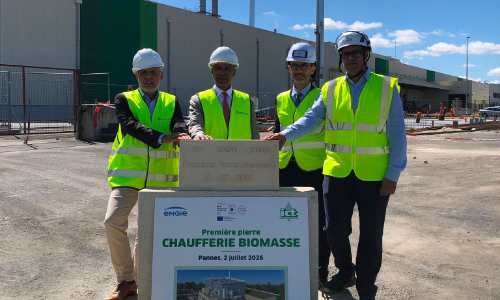
A ‘circular’ solution for the sector has been to recover energy from the process of producing fibres for papermaking. But the introduction this year of a 95% biomass threshold for ETS eligibility has penalised early movers by withdrawing the free allowances meant to repay their energy transition investments.
The pulp and paper sector is also suffering from another of its characteristics, its many small mid-caps, with varied capacities to invest in the energy transition. Raising an existing ETS ‘exemption threshold’ could however spare these small emitters millions in auditing costs that result in minimal emissions cuts.
Finally, the ETS Market Stability Reserve (MSR), originally designed to address surplus allowances, now risks driving up carbon costs beyond levels required for emission reductions by invalidating allowances. While the Commission’s proposals suggest adjustments, industry leaders argue these measures are insufficient to mitigate the impact on competitiveness.
All those factors combined notably jeopardize the European pulp and paper industry’s ability to maintain its global leadership in the bioeconomy sector, which is projected to be worth €6.7 trillion globally by 2030. The industry’s endeavours in biorefinery, already representing 6% of its added value, have made it into one of the sole areas of cutting-edge technological development in which Europe leads the world.
Jori Ringman, Cepi Director General:
“Bio-based materials are not only good for the climate, but also one of the few sectors with growth potential in Europe. The ETS should dovetail with circular bioeconomy and the emerging bio-based carbon economy to fully tap into the benefits of a resilient, sustainable, competitive, and security-driven economic growth.”
RELATED NEWS