Automation is no longer a nice-to-have but optional efficiency tool. It is now a strategic necessity that belongs on the board agenda, to be discussed alongside AI. In a world of geopolitical uncertainties, labor shortages, supply chain disruptions, cost pressures, energy insecurity and high expectations for uptime, companies that deploy automation will be far better placed to remain resilient, competitive and – ultimately – relevant.
Visibility + intelligence + action = control
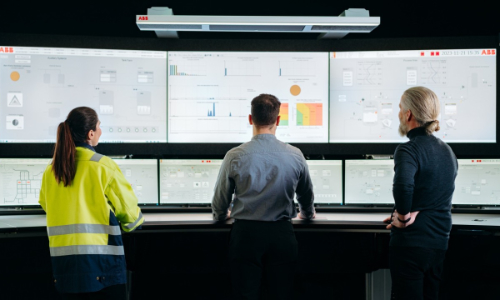
At its core, industrial automation provides three things. First, visibility to know what is happening across a process, plant or machine in real time. Second, intelligence to make the right decisions quickly and consistently. And third, action to respond safely and reliably across electrical, mechanical and thermal systems. When companies put these capabilities together, they gain something invaluable in an unpredictable world: control.
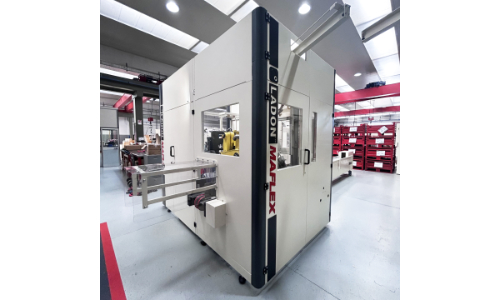
Not all automation is the same. In machine automation, the focus is on automating physical tasks performed by machines – usually to gain speed, precision and safety. It makes individual machines and production lines more adaptive, efficient and easier to run. Think automated packaging systems, computer-controlled machine tools, and robotic arms on an assembly line.
Process automation is different. Here digital tools help to automate industrial workflows and processes at the heart of mission-critical operations such as power generation, chemicals production, mining, marine and ports, water and other essential industries. In these environments, safety, reliability and efficiency are everything. A disruption can put lives at risk, cause major economic losses, and damage equipment and the environment.
In these industries, automation is more than a productivity tool. It’s a safety system that keeps people out of harm’s way, provides predictability and serves as the backbone of operational continuity and business resilience. We know that everything that runs well can be engineered to run even better – for more efficient use of both materials and labor. In a complex and often volatile world, this is the mindset that allows companies to stay competitive.
Automation is a strategic choice
In some boardrooms, automation is still framed as a technology discussion. In reality, it should be a strategic discussion about resilience, safety, competitiveness and long-term value creation.
That’s especially true now that automation can tap more easily into the insights provided by digitalization and artificial intelligence. Analytical AI tools – which turn data into insights – are nothing new; ABB has been embedding them in its solutions for more than a decade. Generative AI expands the range of applications because it can reduce complexity, develop solutions and make recommendations. The potential is huge: AI can turn vast amounts of operational data into actionable insight, to support predictive maintenance, improve decision-making, reduce waste and optimize the use of energy and other resources.
Reality check: industrial stability vs AI disruption
In industrial settings, the path to an AI-enabled future is more complex than the headlines suggest. Many companies are reluctant to “touch the core” of their critical infrastructure, because they cannot simply pause production, and nor are they willing to risk disrupting their operations in pursuit of cutting-edge technologies. The challenge is how to deploy AI tools without risking system disruption?
ABB favoirs the “Automation Extended” approach. Instead of a sweeping modernization of control systems, we aim for innovation with continuity – engineering a progressive AI roll-out within existing systems that is safe and progresses at a company’s own pace. It is also important that AI solutions are designed to support human decision-making and not override it. The value of AI-assisted automation is that gives companies fewer surprises, as well as enabling faster response times and better use of people, energy and capital.
Automation preserves expertise, tackles talent shortages
That’s because this transformation is not only about technology, but also about talent. Many companies are finding it hard to recruit engineers and operators, and some industries are bracing themselves to cope with a wave of retirement among their most skilled people.
Filling these gaps will be vital to stay competitive, and here too the combination of automation with AI has an important role to play: they help preserve expertise by embedding knowledge in systems, support operators with better insights and decision support, and make industrial work safer, more attractive and less physically demanding for the next generation.
Automation is converging with a second trend – the electrification of everything. Together, they will shape the next industrial era. Electrification is changing how industries power their increasingly complex operations; automation ensures that these systems can be controlled, optimized and run reliably.
Together, electrification and automation are making industries more productive, more resilient and more sustainable. They help industries to compete on reliability, quality, energy efficiency, technological sophistication, and the flexibility that’s possible by being physically close to their customers. None of that works at scale without automation.
Automation is no longer an optional technology choice. It is a strategic leadership decision.
Photo/ABB
RELATED NEWS