Dual-listed woodfibre and bioeconomy resource group Sappi, reported this week its results for the quarter ended 31 March 2026.
While headline earnings were impacted by an unprecedented “risk-off” global environment and a volatile Rand / US Dollar exchange rate, the group has significantly accelerated its focus on innovative business enhancements to ensure global competitiveness.
Key financial highlights for the quarter:
- Adjusted EBITDA of US$52 million
- Adjusted EPS loss of 8 US cents per share
- Liquidity remained well managed during the quarter, with cash on hand of US$192 million and access to a further US$632 million of committed, undrawn revolving credit facilities in Europe and South Africa
- Although sales volumes increased year‑on‑year, selling prices declined across all regions
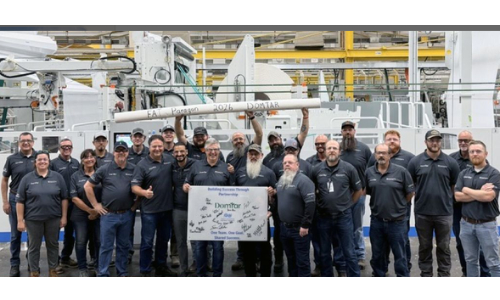
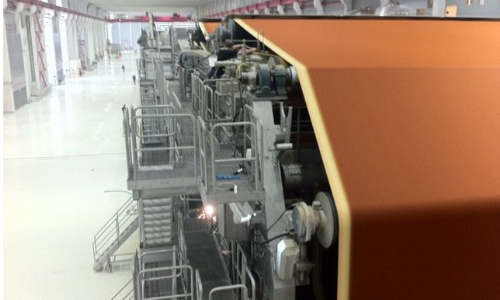
- North American paperboard volumes increased 27% year-on-year, reflecting continued progress in the ramp-up of Somerset Mill PM2.
- In Europe, underlying profitability benefited from solid sales volumes and ongoing fixed-cost savings initiatives.
- For South Africa, the region’s profitability was materially affected by adverse US$/ZAR exchange rate movements as well as significantly lower US Dollar-denominated dissolving wood pulp prices.
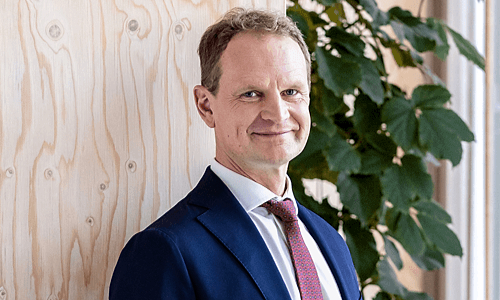
Turning to the outlook for the third financial quarter, Sappi CEO Steve Binnie explains: “Against a backdrop of continued market uncertainty arising from ongoing trade tensions, escalating geopolitical conflicts, and their broader indirect effects on global macroeconomic conditions, input costs and currency movements, we are adopting a cautious outlook. On this basis, Adjusted EBITDA for the third quarter of FY2026 is likely to be below that of the second quarter of FY2026.”
Sappi is a global, diversified woodfibre company that operates in over 150 countries, with manufacturing facilities in Europe, North America, and South Africa. A high-level summary of each market is reported below:
South Africa
Despite steady demand and sales volumes across all segments, profitability of the South African region was negatively impacted by lower selling prices. In particular, the pulp segment’s profitability was materially affected by significantly lower US Dollar‑denominated dissolving wood pulp (DWP) prices, compounded by adverse exchange rate movements.
Containerboard sales volumes were broadly in line with the prior year, supported by robust agricultural demand and positive market forecasts for the 2026 citrus season. However, net selling prices were 3% lower than last year, reflecting weak global containerboard market conditions and increased competition from low‑priced imports into South Africa.
Europe
Market conditions in the European region remained challenging, reflecting persistent macroeconomic weakness and a significant oversupply in paper markets. Despite the subdued demand environment, sales volumes were 2% higher than the prior year.
Consolidation remains a key theme and a key focus point for the Sappi leadership team will be the finalisation of the proposed Joint Venture with European counterpart UPM. Work is progressing in line with the targeted timeline for the signing of definitive agreements in the first half of 2026. Completion of the transaction remains subject to the signing of definitive agreements, receipt of all required regulatory approvals and fulfilment of customary conditions precedent, with closing anticipated by the end of 2026.
North America
Profitability of the North American region improved compared to the prior quarter but remained substantially below last year. Performance was adversely affected by the materially lower paperboard pricing and slower‑than‑anticipated ramp‑up of paperboard sales volumes.
The Somerset Mill PM2 investment is gaining momentum after a slow start and the group expects to benefit from its long-term investment here.
Strategic reshaping of Sappi
With its extensive global footprint, Sappi is a complex organisation to analyse, particularly in a cyclical business influenced by shifting global trade trends.
The Sappi leadership team draws attention to its ongoing investment in its North America operations.
“For stakeholders analysing the Sappi results, it is important to remember that Sappi continues a strategic pivot toward its US operations and developments in this market will be key to the long-term value proposition of the group,” explains Binnie.
Sappi remains a leader in the global bioeconomy
As Sappi enters its 90th year of being listed on the JSE, the company points to its sustainability credentials as key to its ability to weather rapidly evolving market conditions.
Binnie concludes: “Ultimately, while the current reporting period reflects the inescapable pressures of a cyclical global market, our strategic focus remains fixed on the structural shift toward the global bioeconomy. By aligning our operational DNA with the evolving sustainability landscapes of the United States, Europe, and South Africa, we are doing more than just navigating a downturn; we are securing our ‘license to operate’ for the next decade. This dual-market understanding allows us to bridge the gap between rigorous Northern Hemisphere regulatory expectations and the unique resource-security needs of the Southern Hemisphere. It is this depth of sustainability credentials that transforms Sappi from a cyclical participant into a long-term resilient asset, positioned to capture value as the world pivots toward a nature-positive industrial future.”
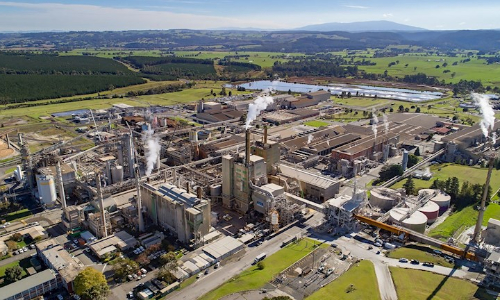
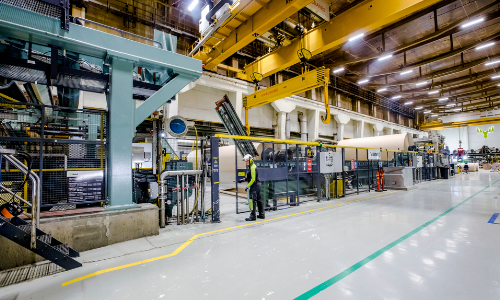
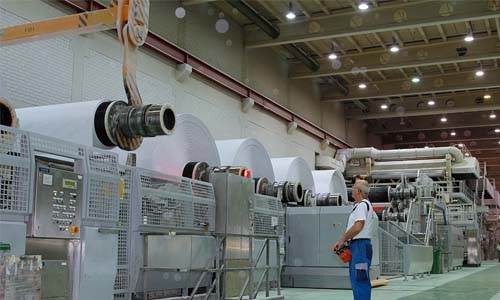
Photo/Sappi
RELATED NEWS