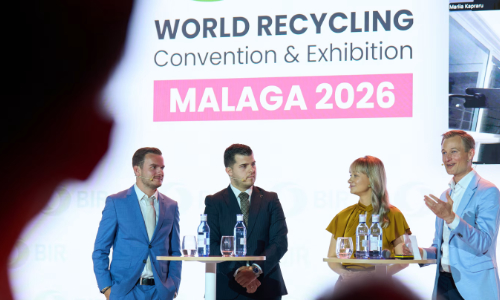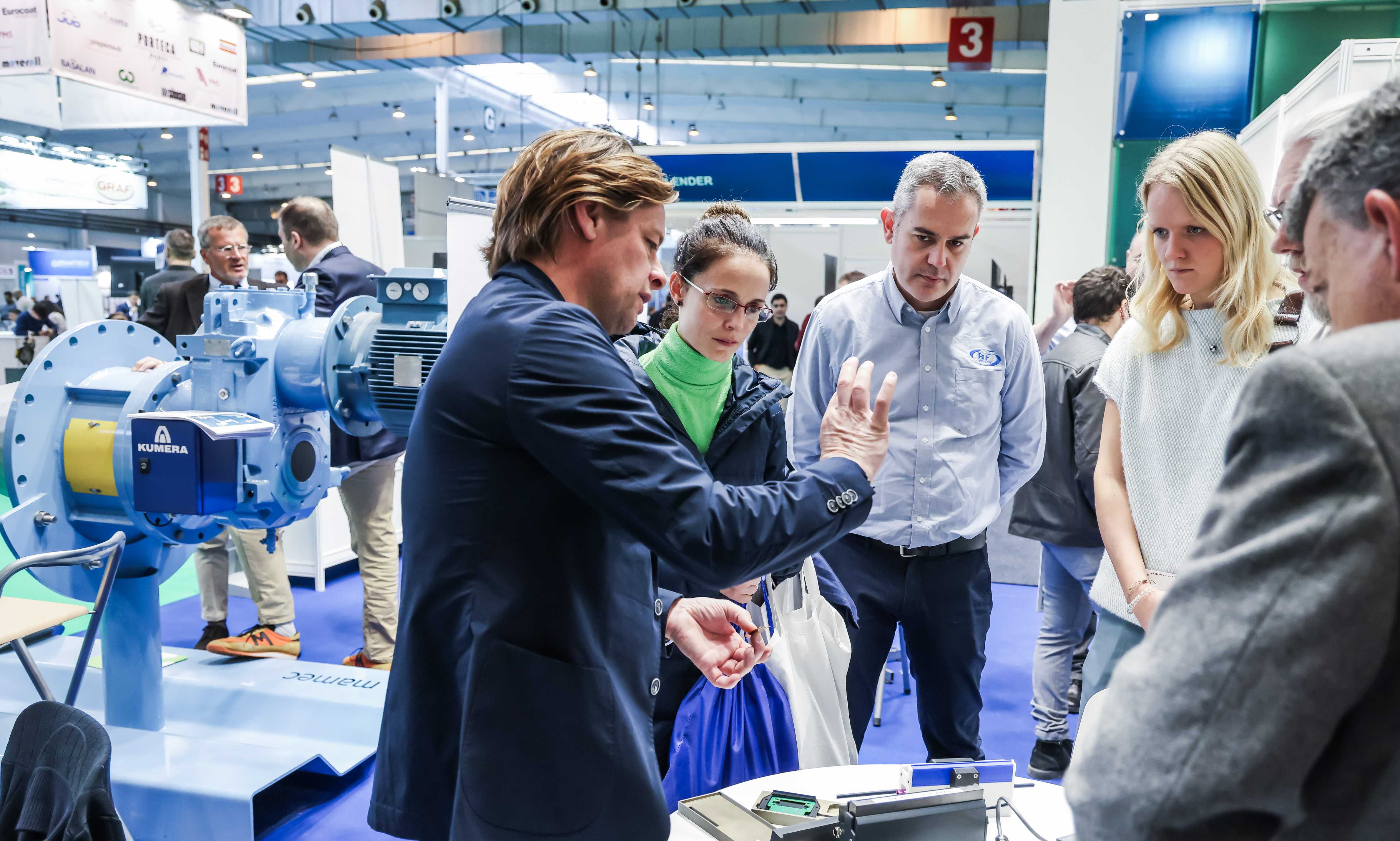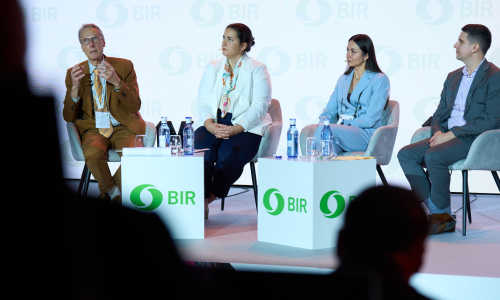
Trade barriers and restrictions are increasingly prompted by political and strategic concerns for supply chain security rather than economic or environment reasons, the Bureau of International Recycling’s World Recycling Convention in Malaga, Spain has been told.
Recent policy shifts in the United States and Europe and elsewhere were highlighted by speakers and delegates during the International Environment Council session on 26 October. The challenge for those advocating free trade in secondary raw materials, such as BIR, was presented by Trade and Environment Director Alev Somer who quoted OECD analysis that export restrictions had increased fivefold in the past 15 years.
Ms Somer said the worrying trend impacted heavily on raw materials and specifically recycled metals which are deemed strategic or critical because they are scarce in their particular region. BIR argues that policy makers introducing trade barriers do not understand the business model of the recycler and are undermining the Circular Economy.
“We need global supply chains,” she insisted. “We need to reach out to where we can refine our material, where we can recycle them. Trade restrictions are doing the opposite: they kill our industry.”
Changing narratives
During her presentation on the policy shift from securing sustainable supply chains to strategic supply chains, the Director reviewed discussions with G7 countries and the OECD over the past three years.
“The conversation is changing from open trade towards ‘We need to be more resilient’ and ‘Oh, we have a security issue’. Now they are looking more and more to economic security and onshoring. Then, it’s ‘Let’s do things domestically’. Or they think of stockpiling and approaches that bring about the feeling of national security.
“We are shifting from resilient, sustainable and diversified supply chains towards a much stronger emphasis on economic security, national security and strategic dependencies. So we are raising our voice as much as we can.”
Opening the session, IEC Chairman and President of Recycling Europe Olivier François reminded delegates that discussions on the EU’s updated Waste Shipment Regulation (WSR) began in 2019. He noted critically that restrictions on recycled metals exports, initially considered in the context of the EU’s Steel and Metals Action Plan, had subsequently found their way into the WSR. “From a wide, open discussion on waste shipments, suddenly there is a very specific and very important consequence for us with regard to the export ban on metal to non-OECD countries,” he said.
National security concerns
A significant change in emphasis in US policy on exports of secondary raw materials, and particularly critical raw materials, is being highlighted by the country’s national recycling association ReMA. Adam Shaffer, VP International Trade, told the session: “What you’re seeing [in Europe] in terms of trade restrictions disguised as environmentalism, in the US we’re seeing trade restrictions disguised as national security concerns.”
Mr Shaffer said national security was quoted by the first administration of President Trump to justify import controls in 2017-19 which were designed to help domestic industries increase production. This time, export restrictions are being used.
“Over the last couple of months, we’ve seen the Trump administration’s efforts to impose what’s called a domestic purchasing requirement for recycled tungsten and black mass.”
He explained it meant a shift towards recoverable critical minerals by trying to secure domestic supply chains for minerals and materials seen as scarce. A Defense Production Act requires traders to seek authorisation from the government to export those materials, even if there is no domestic demand for them.
ReMA is currently working on a report analysing the extent of recycled materials in defence supply chains. “The government has been considering, for example, a 25% domestic purchasing requirement for high value copper scrap,” said Mr Shaffer. “That’s a huge amount given the actual copper scrap usage in defence supply chains.”
From the floor, ReMA President Robin Wiener (USA) emphasised that domestic purchasing requirements were a new development in the US.
“When we met with the government, we said, ‘Okay, you’ve just given us an export ban for tungsten and black mass’. They said: ‘What are you talking about? It’s a domestic sales requirement and you can get an exemption’. Well, you get an exemption if you show your supply chain is with friends.”
Ms Wiener was also concerned about the issue of traceability, arguing that having to secure an exemption was effectively licensing.
“There are ways of the government finding out what your supply chain looks like through a licensing regime. How do we map our supply chains to show [products] are staying in the West? The approach the US government is taking is that ‘Western’ supply chains are good for materials that are determined to be critical. That is a policy issue, not a technical issue.”
Advocacy effort
Earlier in the session, Trade and Environment Policy Officer Alexandra Vartan explained how BIR has mobilised its resources rapidly to challenge the European Commission over a delegated act specifying which non-OECD countries were authorised to receive EU exports of recycled metals among a raft of secondary material streams.
She explained how the advocacy department had quickly updated BIR members and issued a public statement as to why the proposed restrictions to key non-OECD markets could disrupt recycling businesses and global supply chains. A consolidated BIR response was sent to the Commission.
Letters were also sent to the authorities of affected countries and that was followed by meetings in Brussels with representatives of Egypt, Hong Kong, India, Malaysia, Pakistan, Taiwan and Thailand. Such engagement would continue, Ms Vartan explained, ahead of the EU’s final list on 21 November and the regime coming into force in May 2027. The list is to be reviewed every two years.
Mr François urged the Commission to offer detailed analysis of why certain metals were chosen and to talk more to stakeholders. “In Europe, it is very difficult to bring the different partners of the value chain around the same table to have an organised discussion. At the moment, it is just one part of the value chain that is getting the ear of the politicians.”
“If we want to define a strategy it has to be for the entire value chain – from the raw material to the metal processing to, for example, the car manufacturers,” he insisted.
Photo/BIR
RELATED NEWS