UPM Communication Papers has published its 2025 climate report, showing strong progress on the climate action roadmap. In Europe, fossil CO₂ emissions from own operations and purchased energy (Scope 1 and 2) fell by 38% per tonne of paper in 2025, measured against the 2023 baseline year. The reduction demonstrates accelerated implementation of the climate action roadmap.
In November 2025, UPM Communication Papers launched its climate action roadmap with a target to reduce fossil CO₂ emissions from its own operations and externally sourced energy at European mills to an average of ≤100 kg per tonne of paper by 2030. This equals a reduction of more than 70% compared to the 2023 baseline. The target reflects UPM Communication Papers’ commitment to climate action and supports customers in progressing towards their own climate goals.
The new climate report provides transparent, externally verified emissions data for customers and other stakeholders. Based on the 2025 results, the average Scope 1 and 2 carbon footprint at UPM Communication Papers’ European mills was 310 kg of CO₂ per tonne of paper, compared to 490 kg in 2023 and 400 kg in 2024, demonstrating solid progress towards the 2030 target.
“When we launched our climate action roadmap last year, we set a clear direction for reducing emissions at our European mills. The new climate report shows that our actions are delivering results. Our progress translates into tangible emissions reductions for our customers, supported by transparent, third-party verified data they can use in their own reporting,” says Gunnar Eberhardt, Executive Vice President, UPM Communication Papers.
The emission reductions reported for 2025 were achieved through measures in energy sourcing, production and logistics, including increased use of renewable electricity, greater utilization of electric boiler capacity, and improvements in energy efficiency and transportation planning.
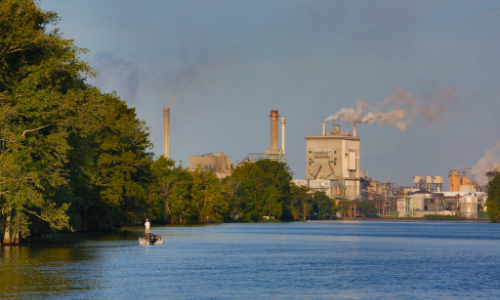
While UPM Blandin in the United States is not included in the European 2030 target, the mill also achieved significant progress in 2025, reducing its Scope 1 and 2 emissions by 31% compared to 2024.
Photo/UPM
RELATED NEWS