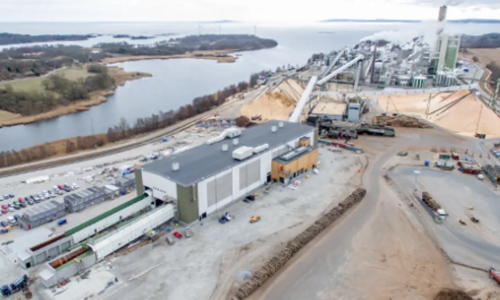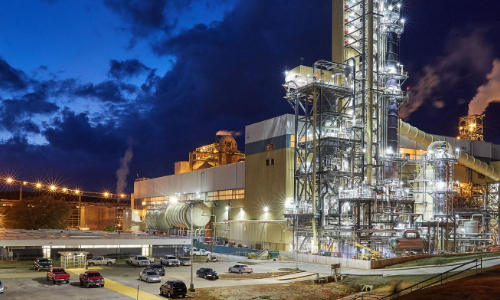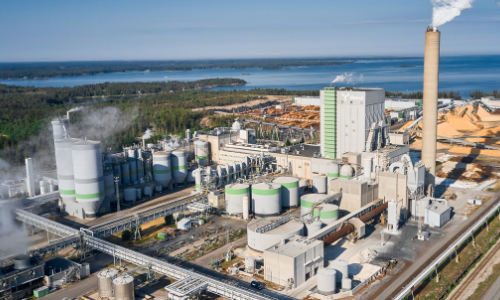
Metsä Fibre’s Rauma pulp mill celebrates its 30th anniversary this year. Since starting operations in 1996, the mill has become a significant employer in the Satakunta region and an essential part of the area’s industrial history and future.
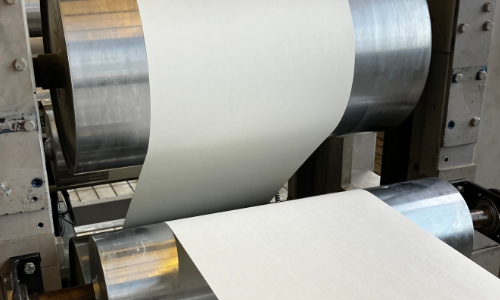
The Rauma pulp mill primarily produces high-quality softwood pulp used as a raw material for paperboard, tissue, printing papers, and specialty products. With an annual production capacity of 650,000 tonnes, the mill’s signature product is Metsä Strong pulp. As the name suggests, this is a strong, bleached softwood pulp used in magazine papers, food packaging, construction, and pharmaceutical papers.
In addition to high-quality pulp, the Rauma mill produces biochemicals used in industrial production, cleaning agents, and the food industry to replace fossil-based raw materials. The mill also generates bioenergy, providing electricity to the grid and district heating to local communities beyond its own operational needs.
The mill employs 220 professionals. “It is great to work at a mill that is such a vital part of the vitality of Rauma and the entire Satakunta region. We are proud to provide jobs, support regional tax revenue, and collaborate closely with local partners,” says Mill Manager Jaakko Ikonen. “Being a good neighbor is a core value for us. We want to support the well-being of children and young people, as well as promote road safety and regional growth.”
Thirty Years of Expertise and Continuous Improvement
The history of the Rauma pulp mill dates back to 1990 when the decision to build Metsä-Rauma was made. Construction took place between 1994 and 1996, and the first pulp bale was produced in March 1996.
Technically, the mill remains in excellent condition due to regular investments. Over three decades, it has grown, modernized, and evolved into a cornerstone of the modern bioproduct industry. Investments over the years have significantly improved both production and environmental efficiency.
The site is also home to a pine sawmill that started operations in 2022. Close cooperation between the two facilities allows for highly efficient raw material utilization: the sawmill uses logs, while the pulp mill uses fiberwood, sawmill chips, and bark. In return, the sawmill receives its required energy from the pulp mill.
“Continuous development is a vital part of our culture. Last year, we piloted carbon dioxide capture from the pulp mill’s flue gases in collaboration with the technology company Andritz. Following this pilot, Metsä Group is exploring the possibility of a larger-scale carbon capture experimental plant in Rauma. No final decision has been made yet. This is a great example of how we are evolving pulp production and the utilization of side streams,” Ikonen concludes.
Photo/Metsä Group
RELATED NEWS