At ProPaper Dubai 2026, Abdel Rhman Obaid calls for greater industry involvement in material innovation, value creation and the emerging renewable materials economy.
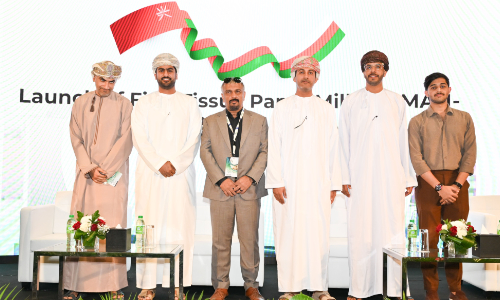
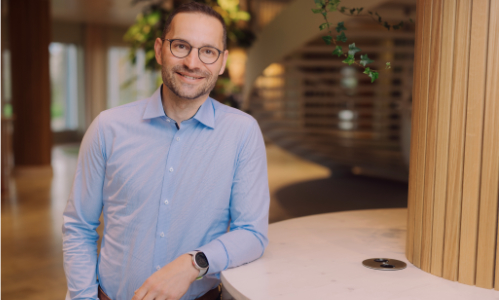
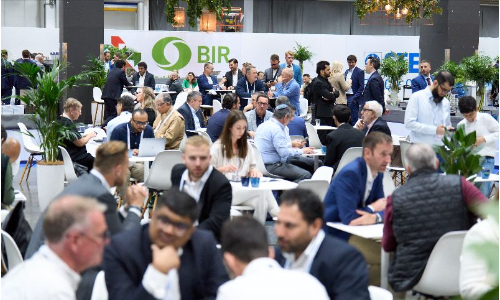
The paper industry must look beyond production volumes and manufacturing efficiency to play a greater role in shaping the future of materials, said Abdel Rhman Obaid, Group CEO of M.A.H.Y. Khoory & Co. Group, during his keynote address at ProPaper Dubai 2026.
Union Paper Mills (UPM), a company of M.A.H.Y. Khoory & Co. Group, is the Principal Sponsor and Strategic Partner of ProPaper Dubai 2026, reinforcing its commitment to advancing industry dialogue and the future development of the paper and packaging sector.
Delivering a keynote titled “Beyond Paper: Are We Still in the Paper Industry?”, Obaid challenged manufacturers to reconsider the traditional boundaries of their industry and recognise the expanding role of fibre in the emerging renewable materials economy.
“For decades, our industry has measured success through production capacity, tonnes manufactured, machine efficiency and cost per tonne. These measures remain essential. But they no longer tell the whole story,” he said.
He argued that the industry’s future should be defined not only by the products it manufactures, but increasingly by the applications and solutions that fibre can enable. Innovations in engineered fibre, lightweight packaging and emerging material applications are creating new possibilities, requiring manufacturers to think beyond conventional paper products.
A central theme of his address was the industry’s influence over the decisions that determine future material demand.
Obaid questioned whether paper manufacturers are sufficiently involved in the early stages of product development, packaging design and material specification, where critical decisions about performance, cost and material selection are often made.
“When a global manufacturer redesigns its packaging, decisions about materials and performance may be made long before an order reaches a paper mill. If we enter that process only as suppliers, we risk competing on price for a product whose value has already been defined by someone else,” he observed.
He urged the industry to become more actively involved in shaping material applications rather than remaining primarily a supplier of manufactured products.
From production volume to value creation
Obaid also challenged the industry’s traditional approach to growth, which has historically been measured by additional capacity and higher production volumes.
With innovations increasingly enabling better performance using less material, he raised a fundamental question: can an industry built around selling more material create greater value by helping customers use less of it?
The answer, he suggested, lies in understanding what customers ultimately require: protection, efficiency, reliability and performance, rather than simply a given quantity of paper or packaging material.
“We must become as ambitious about the value created from every tonne of fibre as we have been about the efficiency of producing it,” he stated.
This shift also has implications for circularity. Obaid positioned recycling not simply as an environmental responsibility, but as a source of industrial competitiveness and economic value.
He emphasised that the opportunity lies not only in recovering greater quantities of material, but in transforming recovered resources into higher-value industrial applications through stronger connections between resource recovery, manufacturing and innovation.
An opportunity for the UAE and the wider region
Looking ahead, Obaid highlighted the opportunity for the UAE and the wider Middle East to develop stronger capabilities within the emerging renewable materials economy.
With the region investing in industrial diversification, advanced manufacturing and more resilient supply chains, he pointed to initiatives such as Make it in the Emirates as an important foundation for future industrial development.
However, he stressed that regional ambition must extend beyond expanding manufacturing capacity to developing the interconnected capabilities needed to compete in tomorrow’s materials industries.
Concluding his address, Obaid called on industry leaders to broaden their vision of what the paper industry can become.
“We have spent generations mastering how to manufacture paper. The next generation must master what paper can become.”
Photo/Al Dhafra
RELATED NEWS